
Loading...
Blog > Which Idaho Cities Have the Mildest Winters?
By Denise Abmont | Updated June 2026 | 8 min read
Worried Idaho winters mean months of shoveling? The Treasure Valley tells a different story, and where you buy changes everything about how your winters feel.
Which Idaho Cities Have the Mildest Winters?
Idaho's mildest winters are in the southwestern Treasure Valley, especially Boise, Eagle, Meridian, Nampa, and Caldwell. According to the National Weather Service, Boise averages a January low near 25°F and roughly 18 inches of snow a year, far less than northern towns like Coeur d'Alene or mountain communities like McCall and Sun Valley. Lower elevation and a high-desert valley location keep these cities drier and warmer, so snow usually melts within days rather than piling up for the season.
Key Takeaways
- The Treasure Valley has Idaho's mildest winters thanks to low elevation and a high-desert climate.
- Boise averages about 18 inches of snow a year, versus 40-plus inches in Coeur d'Alene.
- Eagle, Meridian, Nampa, and Caldwell share Boise's mild winter pattern.
- Valley snow usually melts within a few days, so commutes and yards stay manageable.
- Mountain towns like McCall and Sun Valley trade mild winters for deep snow and skiing.
- Where you buy in Idaho changes heating costs, commute reliability, and year-round access.
By the Numbers
- Boise averages roughly 18 inches of annual snowfall and a January low near 25°F, according to the National Weather Service.
- Coeur d'Alene in northern Idaho averages over 40 inches of snow per year, per NOAA climate normals.
- Idaho's population passed 2 million in recent years, with the Boise metro driving much of the growth, according to the U.S. Census Bureau.
- The Treasure Valley sits at roughly 2,700 feet elevation, well below mountain communities, per the U.S. Geological Survey.
Thinking about a move to a milder corner of Idaho? Call Abmont Realty Group at 208-789-4320 to talk through which Treasure Valley city fits the winter lifestyle you want.
Why the Treasure Valley Stays Mild
The Treasure Valley stays mild because of two things working together: low elevation and a high-desert valley setting. Cold air and heavy snow build up at altitude, and the valley floor sits well below the surrounding mountains.
Boise, Eagle, Meridian, Nampa, and Caldwell all share this geography. They sit on a broad plain at roughly 2,700 feet, ringed by foothills that catch the worst of the weather before it reaches town. The result is shorter, drier winters than most people expect from a state known for skiing.
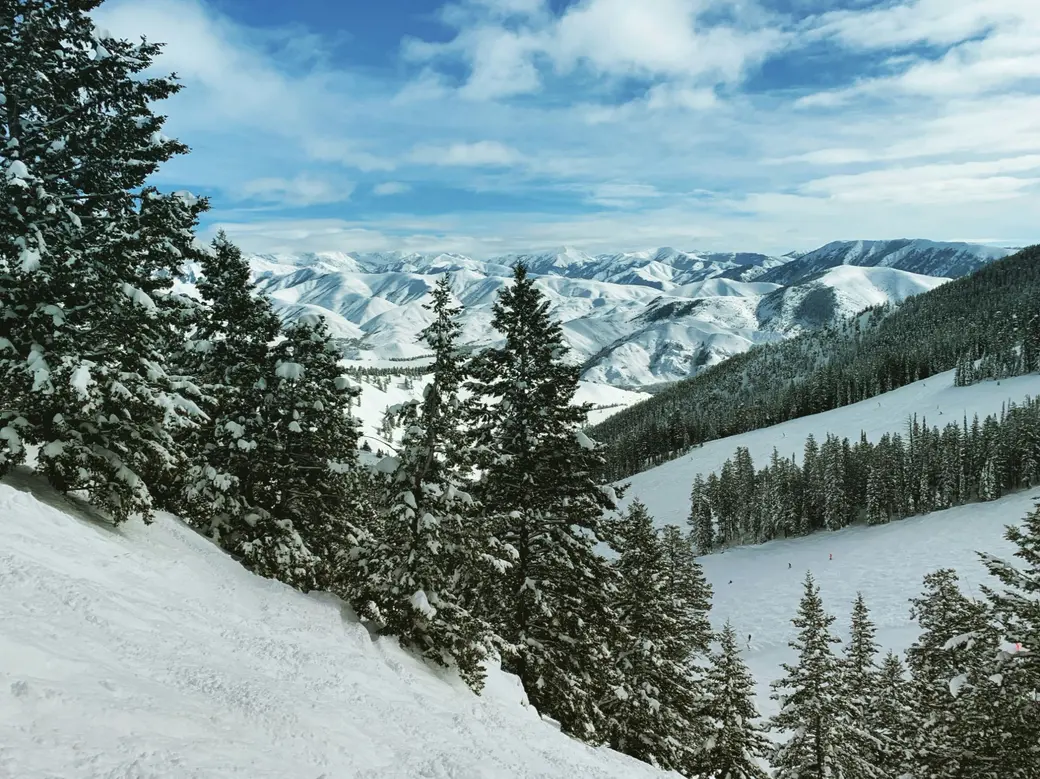
When people picture Idaho winters, they're usually picturing the mountains. Sun Valley, McCall, and the northern panhandle around Coeur d'Alene get the deep snow that fills ski reports. The valley cities get a few inches at a time that melt off quickly, which is a completely different way to live through December and January.
This distinction matters more than buyers relocating from out of state realize. The Treasure Valley moves differently than national averages would suggest, and talking through what winter actually looks like in a specific city with someone local matters here.
Boise: The Benchmark for Mild Idaho Winters
Boise sets the standard for mild winters in Idaho. Average January lows hover around 25°F, and the city sees roughly 18 inches of snow across an entire winter, according to the National Weather Service.
What that looks like day to day is snow-dusted rooftops in the morning and dry streets by afternoon. Major storms happen, but they're the exception, not the rhythm of the season. The winter of 2016 to 2017, locally nicknamed Snowmageddon, is memorable precisely because it was unusual.
For buyers coming from California, Arizona, or Texas, Boise offers enough snow to feel like a real winter without the commute headaches and heating bills that come with heavier-snow regions. If you want to understand how relocation timing and neighborhood selection play into that, our relocation guide walks through the practical side of moving here.
Eagle, Meridian, Nampa, and Caldwell
The cities surrounding Boise share its mild winter pattern almost exactly. Eagle, Meridian, Nampa, and Caldwell all sit on the same valley floor, so their snowfall and temperatures track closely with Boise's.
Eagle, just northwest of Boise, draws buyers who want larger lots and a quieter pace while keeping the same easy winters. Meridian, the fastest-growing of the group, offers newer construction and shorter commutes. Nampa and Caldwell in Canyon County give buyers more affordable entry points with the same climate advantage.
The practical upside is consistent across all four: lower heating costs, less wear on vehicles from road salt and ice, and outdoor recreation you can use most of the year. This is exactly the kind of trade-off we walk clients through before they pick a city, because the right answer depends on your budget, commute, and how much land you want.
Not sure whether Eagle, Meridian, or a Canyon County city fits your budget and commute? Schedule a quick call with Abmont Realty Group at 208-789-4320 and we'll map it out together.
Where Idaho Winters Get Serious
Idaho's mild winters are a valley phenomenon, not a statewide one. The moment you gain elevation, the picture changes fast.
Coeur d'Alene in the northern panhandle averages over 40 inches of snow a year, per NOAA climate normals. McCall and the central mountains get far more, which is exactly why they're prized ski and snowmobile destinations. Sun Valley and Ketchum near Idaho's resort country see deep, reliable snow that drives a whole winter economy.
None of that is a downside. It's a choice. Buyers who want to ski out the back door or own a snowy mountain cabin are choosing those conditions on purpose. The key is knowing which Idaho you're buying into before you sign, because a 45-minute drive from Boise to Bogus Basin gets you all the snow you want without living in it full time.
What Mild Winters Mean for Your Home Budget
Milder winters translate into real money over the years you own a home. Lower snowfall and warmer lows mean smaller heating bills, less spent on snow removal, and slower wear on driveways, roofs, and vehicles.
It also affects what your home needs. Valley homes rarely need the heavy-duty snow-load roofing, extensive heat tape, or oversized furnaces that mountain properties depend on. That keeps both purchase prices and maintenance more predictable.
Your specific costs depend on the home's age, insulation, and the city you choose, which is where a local market analysis comes in. We help buyers compare more than sticker prices, looking at the real cost of living in a given Treasure Valley home through each season.
How the Treasure Valley Cities Compare for Winter Living
Once you've decided you want mild winters, the next step is sorting out which valley city matches the rest of your life. They share a climate, but they live very differently in the colder months.
Boise gives you the most to do when the temperature drops. Downtown stays active with cafes, events, and the North End's tree-lined streets, and Bogus Basin sits about 45 minutes away for buyers who want skiing without living in the snow. If you want walkability and winter culture close at hand, Boise is the strongest fit.
Eagle leans toward space and quiet. Larger lots and a slower pace appeal to buyers who'd rather have room around them than a short walk to a coffee shop, and the easy winters make maintaining that extra land far less of a chore than it would be in a snowier region. Star, just west, offers a similar feel at a different price point as it grows.
Meridian is built for convenience. Newer neighborhoods, central location, and quick access across the valley make winter commutes predictable, which matters when you're driving to work in January. Nampa and Caldwell stretch the budget further while keeping the same light-snow pattern, a real consideration for first-time buyers and growing families.
There's a version of this that's right for you, and it's not always the obvious one. The way to sort it out is to look at your budget, your commute, and how you actually want to spend a winter weekend, then match a city to that rather than the other way around.
Frequently Asked Questions
What is the warmest city in Idaho in winter?
Boise and the surrounding Treasure Valley cities are among the warmest in winter, with January lows around 25°F. Lewiston in north-central Idaho also runs relatively mild because of its low elevation along the Snake and Clearwater rivers.
Does it snow a lot in Boise, Idaho?
Not by Idaho standards. Boise averages roughly 18 inches of snow across a full winter, and most of it melts within a few days on the valley floor. Heavy, season-long snowpack is a mountain-town experience, not a Boise one.
Is Meridian, Idaho colder than Boise?
No, Meridian and Boise have nearly identical winter weather because they sit on the same valley floor at similar elevation. You can expect the same light, intermittent snowfall and similar temperatures in both cities.
Which part of Idaho gets the most snow?
The mountains and northern panhandle get the most snow. McCall, Sun Valley, and the central mountains see heavy seasonal snowpack, and Coeur d'Alene in the north averages over 40 inches a year, far more than the Treasure Valley.
Is Idaho a good place to live if I hate snow?
If you want a real winter without heavy snow, the Treasure Valley is one of the better choices in the Mountain West. You get four distinct seasons, light valley snowfall, and ski terrain within an hour if you ever want it.
Do I need a four-wheel-drive vehicle for Treasure Valley winters?
For everyday driving in Boise, Eagle, or Meridian, most people manage fine with all-season tires and normal caution. Four-wheel drive matters most if you regularly commute up to the mountains for skiing or live on rural roads that get less plowing.
Finding Your Mild-Winter Home in the Treasure Valley
Idaho's reputation for harsh winters comes from its mountains, not its valleys. If a milder season is what you're after, the Treasure Valley delivers four real seasons with snow that comes and goes rather than settling in for months.
The harder question is which city fits you. Eagle, Meridian, Boise, Nampa, and Caldwell all share the climate but differ on price, commute, lot size, and pace. That's the part worth getting right before you buy.
Ready to find a home in the part of Idaho that matches the winters you actually want? Call Abmont Realty Group at 208-789-4320 or reach us through our contact page, and we'll help you compare your options across the Treasure Valley.
About Denise Abmont
Denise Abmont is the Associate Broker and co-founder of Abmont Realty Group, a top 0.5% Idaho real estate team based in Eagle. With ABR, MRP, ALHS, and ePro designations and 600+ closed Treasure Valley transactions, she specializes in luxury, relocation, and downsizing clients across Eagle, Star, and the greater Boise area. Connect with Denise at AbmontRealty.com or 208-789-4320.

CONTACT US
Phone